

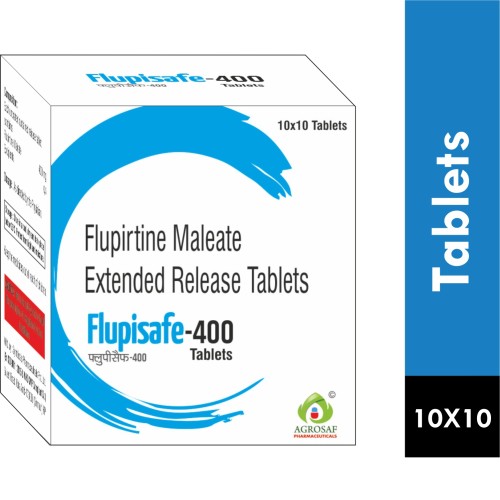
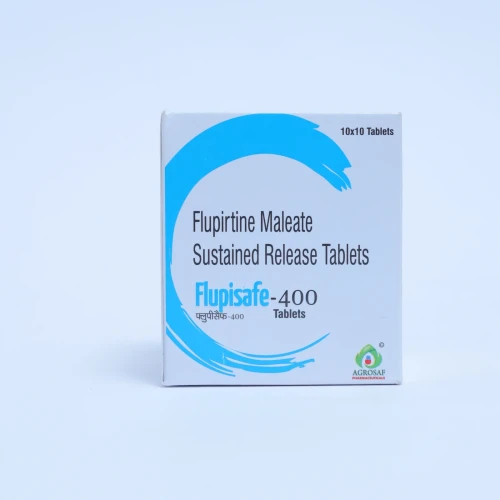
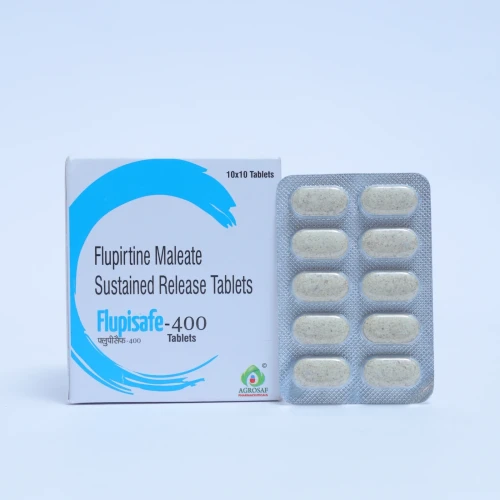
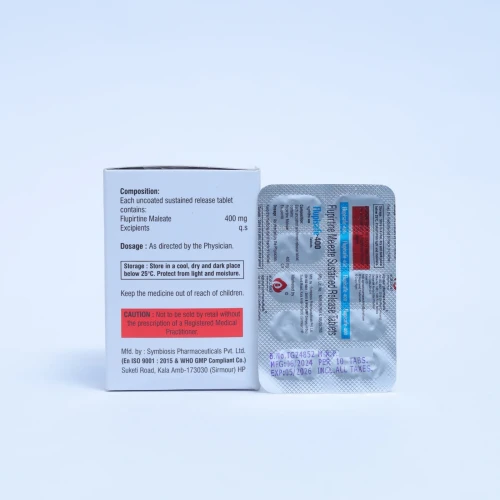
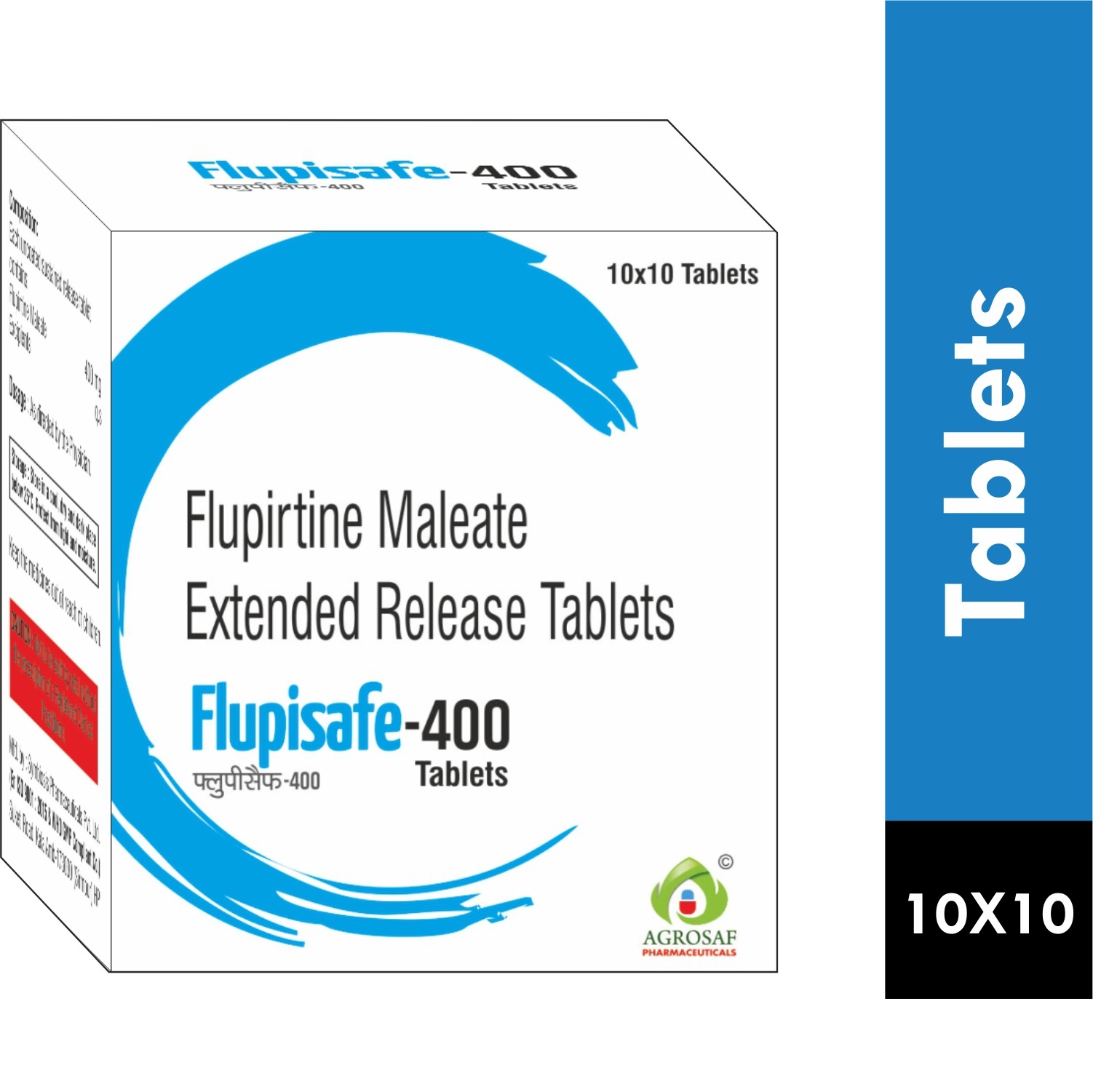
| PACKAGING TYPE: | 10x10 Blister (10 Strips In 1 Box) |
| COMPOSITION: | Flupirtine (400mg) Extended Released |
| FORMULATION: | Tablet |
| Description: | FLUPISAFE 400 Tablet contains Flupirtine Maleate Sustained Release (SR) 400mg, a centrally acting non-opioid analgesic used for the management of moderate to severe pain. Flupirtine works by opening potassium channels and stabilizing neuronal activity, leading to effective pain relief and muscle relaxation without the typical side effects of opioids. The sustained-release formulation ensures prolonged pain control, making it suitable for conditions such as musculoskeletal pain, back pain, post-operative pain, and chronic pain disorders. |
| Side Effects: | Common side effects: Dizziness or drowsiness Fatigue Nausea Dry mouth Rare but serious side effects: Liver toxicity (elevated liver enzymes, hepatitis) Severe allergic reactions (rash, swelling, difficulty breathing) Confusion or nervous system effects |
| How to Use: | Take FLUPISAFE 400 Tablet orally, usually once daily or as prescribed. Preferably take after meals to reduce stomach discomfort. Swallow the tablet whole; do not crush or chew (SR formulation). Follow the prescribed duration and dosage strictly. |
| Precaution: | Use cautiously in patients with liver disorders; regular monitoring is recommended. Avoid alcohol consumption during treatment. Not recommended for long-term use without medical supervision. Inform your doctor about other medications to avoid interactions. Not recommended during pregnancy or breastfeeding without medical advice. |
| Product Benefits: | Provides effective relief from moderate to severe pain. Offers prolonged action due to sustained-release formulation. Has muscle relaxant properties along with analgesic effect. Suitable for chronic pain and musculoskeletal disorders. Non-opioid optio |
Frequently Asked Questions
You May Like
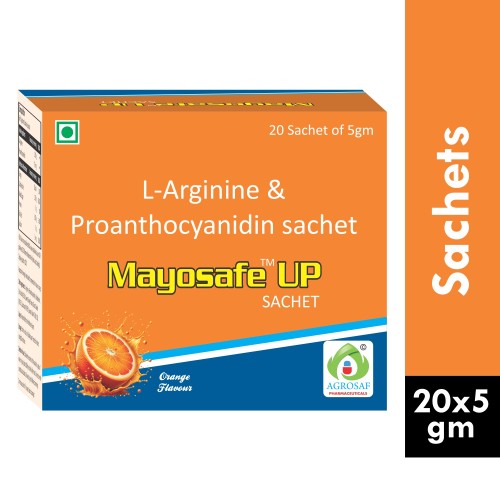
MAYOSAFE UP SACHETS
INGREDIENTS:-(ENERGY 21.00 KCAL,CARBOHYDRATE 1.80GM,ADDED SUGER 0.00GM,PROTEIN 3.00GM,TOTAL FAT 0.20GM,TRANS FAT 90.00MG)L-ARGNINE(3.00GM) & VACCINIUM OXYCOCCOS (PROANTHOCYANIDIN 75.00MG) GRANULES SACHET
₹ 1060/-
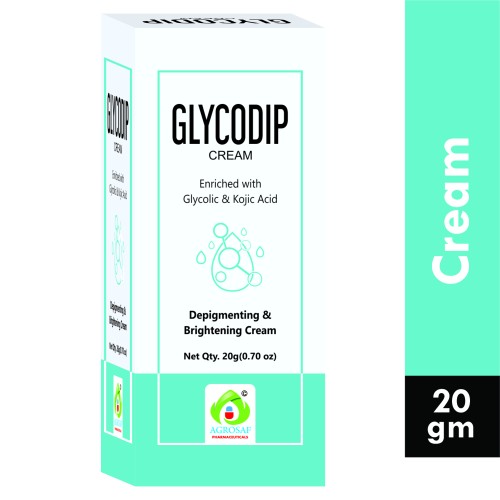
GLYCODIP CREAM
AQUA,Glycolic Acid,CETO STEARYL ALCOHOL,ALPHA ARBUTIN,PROPYLENE GLYCOL,NIACINAMIDE,PROPANEDIOL,DICAPRYLYL CARBONATE,EMULSIFYING WAX,KOJIC ACID DIPALMITATE,CETOMACROGOL 1000,ISOPROPYL MYRISTATE,GLYCERYL STEARATE(AND) PEG-100 STEARATE,GLYCERYL MONOSTEARATE,BETAINE,PHENOXYETHANOL & ETHYL HEXYL GLYCERINE, SODIUM LACTATE,SODIUM GLUCONATE,XYLITYLGLUCOSIDE(AND) ANHYDROXYLITOL (AND) XYLITOL,SODIUM HYDROXIDE,PERFUME,DISODIUM EDTA.
₹ 369.35/-
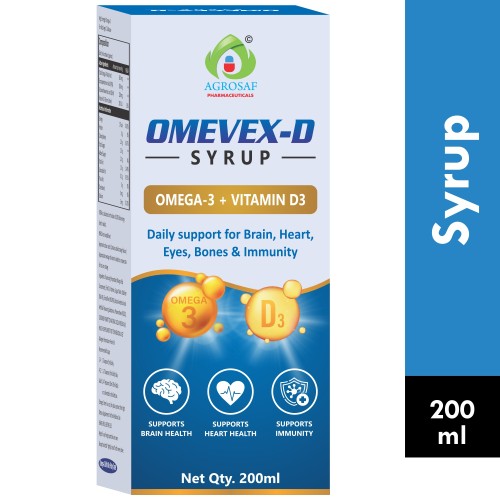
OMEVEX D SYRUP
Total Omega-3 Fatty Acid 610 mg, Eicosapentaenoic Acid (EPA) 260 mg, Docosahexaenoic acid (DHA) 200 mg, Vitamin D3 (From Lichen) 200 I.U
₹ 800/-
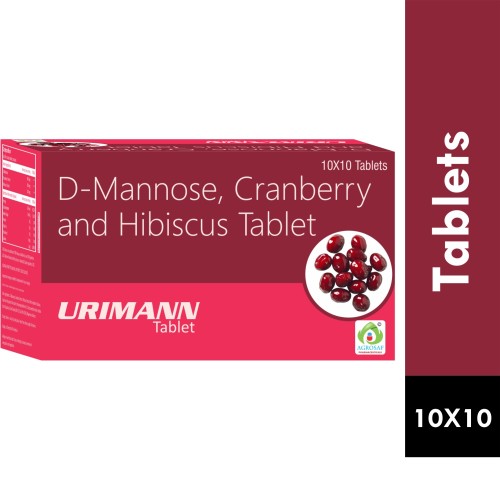
URIMANN TABLETS
Each film coated tablet contains Active Ingredients including D-Mannose 600 mg ( %RDA), Cranberry Extract 300 mg ( %RDA), and Hibiscus Extract 100 mg ( %RDA). Nutritional Information (Approx) per serving: Energy 2.4 kcal (0.12% %RDA), Carbohydrates 0.60 g (0.2% %RDA), Added Sugar 0 g (0% %RDA), Protein 0 g (0% %RDA), Total Fat 0 g (0% %RDA), Cholestrol 0 mg (0% %RDA), and Sodium 1 mg (0.05% %RDA)
₹ 4540/-
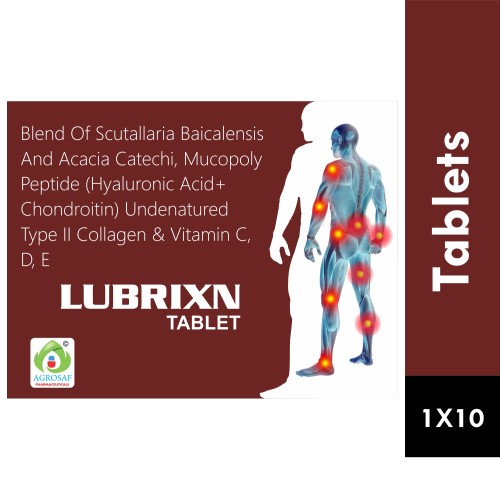
LUBRIXN TABLET
Each coated tablet contains (Approx): Blend of Scutallaria baicalensis and Acacia catechu 500 mg, Hyaluronic Acid 30 mg, Chondroitin 100 mg, Undenatured Type II Collagen 200 mg, Vitamin C 35 mg, Vitamin E 60 mg and Vitamin D3 400 I.U.
₹ 290/-
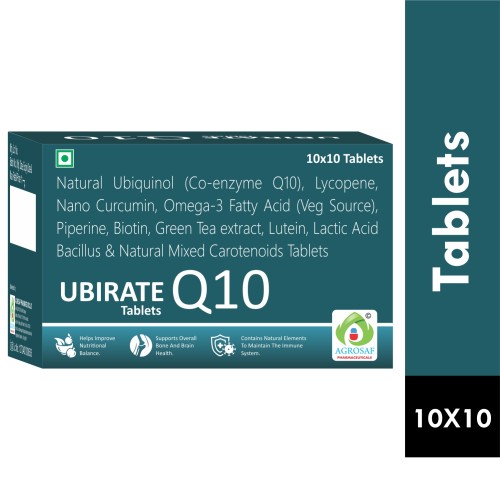
UBIRATE Q10 TABLETS
Each film coated tablet contains: Natural Ubiquinol (Co-enzyme Q10) 50mg, Lycopene 6% 5000mcg, Nano Curcumin 10% 500 mg, Omega 3 Fatty Acids Eicosapentaenoic Acid (EPA) 20% (veg source) 45 mg, Docosahexaenoic Acid (DHA) 10% (veg source) 30 mg, Piperine 5% 5 mg, Biotin 30 mcg, Wheat Germ Oil 25 mg, Lutein 8% 250 mcg, Green Tea Extract 10 mg, Natural Mixed Carotenoids 10 mg, Lactic Acid Bacillus 60 million spores, Vitamin A (Oily form as palmitate) 1600 IU, Vitamin B1 1 mg, Vitamin B2 1 mg, Vitamin B6 0.5 mg, Vitamin B12 0.5 mcg, Vitamin D3 100 IU, Calcium Pantothenate 1 mg, Folic acid 50 mcg, Ferrous Sulphate Eq. to Iron 5 mg, Magnesium Sulphate 1 mg, Zinc Sulphate monohydrate 0.5 mg, Potassium Sulphate 1 mg, Selenium di oxide 70 mcg, Chromium Picolinate 25 mcg, Elemental Boron (as Sodium Borate) 1.5 mcg, Elemental Silicon (as Colloidal Silicon Dioxide IP) 200 mcg, Elemental Nickel (as Nickel sulphate) 5 mcg, Elemental Tin (as stannous chloride dehydrate) 10 mcg, Elemental Vanadium (as Sodium metavanadate) 10 mcg, Colour: Red Oxide Of Iron
₹ 5690/-
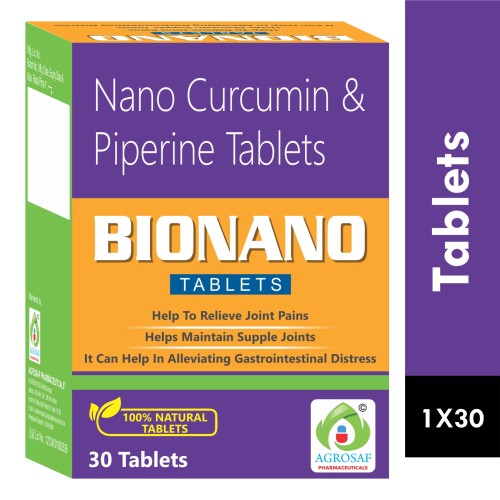
BIONANO TABLETS
Each Film Coated Tablet contains (approx.) Energy Value 0.40 Kcal, Carbohydrates 0.10 gm, Protein 0.00 gm and Fat 0.00 gm. Nano Curcumin 25% 500.00 mg and Piperine 5% 5.00 mg
₹ 1820/-
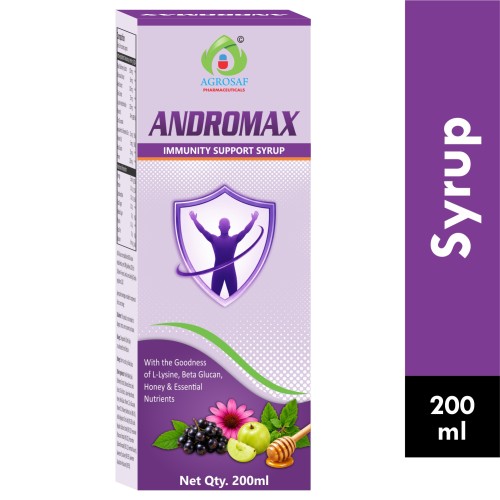
ANDROMAX SYRUP
Each 5 ml contains approx. Black Elderberry Extract 100 mg, Echinacea Extract 60 mg, Amla Extract 100 mg, Tulsi Extract 25 mg, L-Lysine Hydrochloride 250 mg, Vitamin C 40 mg, Zinc Gluconate equivalent to Elemental Zinc 2.5 mg, Vitamin D3 5 mcg, Beta Glucan 25 mg and Honey 250 mg. Nutritional Information: Energy 5 kcal, Protein 0.1 g, Carbohydrate 1.8 g, Total Sugar 0.2 g, Added Sugar 0 g, Total Fat 0 g, Sodium 8 mg and Cholesterol 0 mg
₹ 240/-
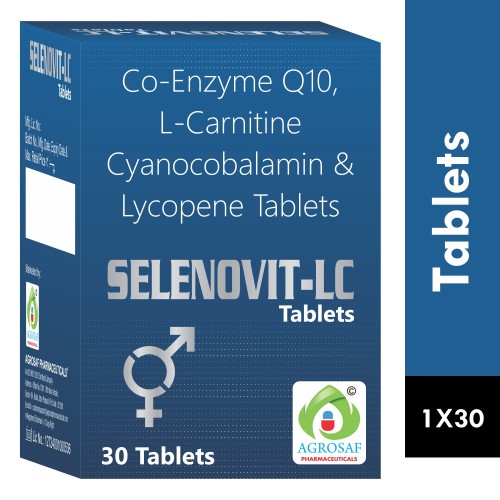
SELENOVIT-LC TABLETS
Nutritional Information: Approx. values per serving/tablet — Energy Value 0.40 Kcal, Carbohydrates 0.10 gm, Fat 0.000 gm and Protein 0.000 gm. Each film coated tablet contains (Approx.) Co-Enzyme Q10 (50%) 100 mg, L-Carnitine 500 mg, Cyanocobalamin 2.2 mcg, Lycopene 10% 5000 mcg and Excipients Q.S.
₹ 2180/-
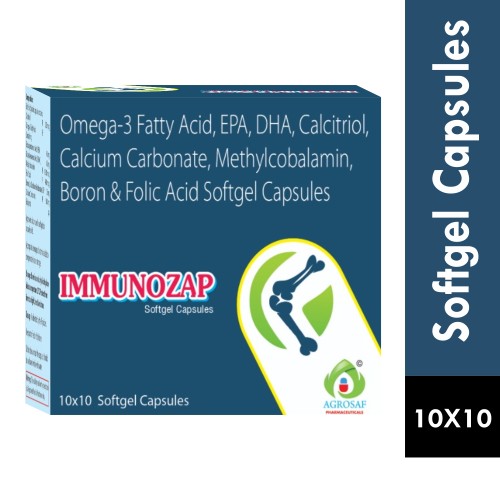
IMMUNOZAP SOFTGEL CAPSULES
Calcitriol (0.25mcg) + Calcium Carbonate (500mg) + Omega-3 Fatty Acid (150mg) + Methylcobalamin (1500mcg) + Folic Acid (400mcg) + Boron (1.5mg)
₹ 2720/-
MAYOSAFE UP SACHETS
INGREDIENTS:-(ENERGY 21.00 KCAL,CARBOHYDRATE 1.80GM,ADDED SUGER 0.00GM,PROTEIN 3.00GM,TOTAL FAT 0.20GM,TRANS FAT 90.00MG)L-ARGNINE(3.00GM) & VACCINIUM OXYCOCCOS (PROANTHOCYANIDIN 75.00MG) GRANULES SACHET
₹ 1060/-
GLYCODIP CREAM
AQUA,Glycolic Acid,CETO STEARYL ALCOHOL,ALPHA ARBUTIN,PROPYLENE GLYCOL,NIACINAMIDE,PROPANEDIOL,DICAPRYLYL CARBONATE,EMULSIFYING WAX,KOJIC ACID DIPALMITATE,CETOMACROGOL 1000,ISOPROPYL MYRISTATE,GLYCERYL STEARATE(AND) PEG-100 STEARATE,GLYCERYL MONOSTEARATE,BETAINE,PHENOXYETHANOL & ETHYL HEXYL GLYCERINE, SODIUM LACTATE,SODIUM GLUCONATE,XYLITYLGLUCOSIDE(AND) ANHYDROXYLITOL (AND) XYLITOL,SODIUM HYDROXIDE,PERFUME,DISODIUM EDTA.
₹ 369.35/-
OMEVEX D SYRUP
Total Omega-3 Fatty Acid 610 mg, Eicosapentaenoic Acid (EPA) 260 mg, Docosahexaenoic acid (DHA) 200 mg, Vitamin D3 (From Lichen) 200 I.U
₹ 800/-
URIMANN TABLETS
Each film coated tablet contains Active Ingredients including D-Mannose 600 mg ( %RDA), Cranberry Extract 300 mg ( %RDA), and Hibiscus Extract 100 mg ( %RDA). Nutritional Information (Approx) per serving: Energy 2.4 kcal (0.12% %RDA), Carbohydrates 0.60 g (0.2% %RDA), Added Sugar 0 g (0% %RDA), Protein 0 g (0% %RDA), Total Fat 0 g (0% %RDA), Cholestrol 0 mg (0% %RDA), and Sodium 1 mg (0.05% %RDA)
₹ 4540/-
LUBRIXN TABLET
Each coated tablet contains (Approx): Blend of Scutallaria baicalensis and Acacia catechu 500 mg, Hyaluronic Acid 30 mg, Chondroitin 100 mg, Undenatured Type II Collagen 200 mg, Vitamin C 35 mg, Vitamin E 60 mg and Vitamin D3 400 I.U.
₹ 290/-
UBIRATE Q10 TABLETS
Each film coated tablet contains: Natural Ubiquinol (Co-enzyme Q10) 50mg, Lycopene 6% 5000mcg, Nano Curcumin 10% 500 mg, Omega 3 Fatty Acids Eicosapentaenoic Acid (EPA) 20% (veg source) 45 mg, Docosahexaenoic Acid (DHA) 10% (veg source) 30 mg, Piperine 5% 5 mg, Biotin 30 mcg, Wheat Germ Oil 25 mg, Lutein 8% 250 mcg, Green Tea Extract 10 mg, Natural Mixed Carotenoids 10 mg, Lactic Acid Bacillus 60 million spores, Vitamin A (Oily form as palmitate) 1600 IU, Vitamin B1 1 mg, Vitamin B2 1 mg, Vitamin B6 0.5 mg, Vitamin B12 0.5 mcg, Vitamin D3 100 IU, Calcium Pantothenate 1 mg, Folic acid 50 mcg, Ferrous Sulphate Eq. to Iron 5 mg, Magnesium Sulphate 1 mg, Zinc Sulphate monohydrate 0.5 mg, Potassium Sulphate 1 mg, Selenium di oxide 70 mcg, Chromium Picolinate 25 mcg, Elemental Boron (as Sodium Borate) 1.5 mcg, Elemental Silicon (as Colloidal Silicon Dioxide IP) 200 mcg, Elemental Nickel (as Nickel sulphate) 5 mcg, Elemental Tin (as stannous chloride dehydrate) 10 mcg, Elemental Vanadium (as Sodium metavanadate) 10 mcg, Colour: Red Oxide Of Iron
₹ 5690/-
BIONANO TABLETS
Each Film Coated Tablet contains (approx.) Energy Value 0.40 Kcal, Carbohydrates 0.10 gm, Protein 0.00 gm and Fat 0.00 gm. Nano Curcumin 25% 500.00 mg and Piperine 5% 5.00 mg
₹ 1820/-
ANDROMAX SYRUP
Each 5 ml contains approx. Black Elderberry Extract 100 mg, Echinacea Extract 60 mg, Amla Extract 100 mg, Tulsi Extract 25 mg, L-Lysine Hydrochloride 250 mg, Vitamin C 40 mg, Zinc Gluconate equivalent to Elemental Zinc 2.5 mg, Vitamin D3 5 mcg, Beta Glucan 25 mg and Honey 250 mg. Nutritional Information: Energy 5 kcal, Protein 0.1 g, Carbohydrate 1.8 g, Total Sugar 0.2 g, Added Sugar 0 g, Total Fat 0 g, Sodium 8 mg and Cholesterol 0 mg
₹ 240/-
SELENOVIT-LC TABLETS
Nutritional Information: Approx. values per serving/tablet — Energy Value 0.40 Kcal, Carbohydrates 0.10 gm, Fat 0.000 gm and Protein 0.000 gm. Each film coated tablet contains (Approx.) Co-Enzyme Q10 (50%) 100 mg, L-Carnitine 500 mg, Cyanocobalamin 2.2 mcg, Lycopene 10% 5000 mcg and Excipients Q.S.
₹ 2180/-
IMMUNOZAP SOFTGEL CAPSULES
Calcitriol (0.25mcg) + Calcium Carbonate (500mg) + Omega-3 Fatty Acid (150mg) + Methylcobalamin (1500mcg) + Folic Acid (400mcg) + Boron (1.5mg)