



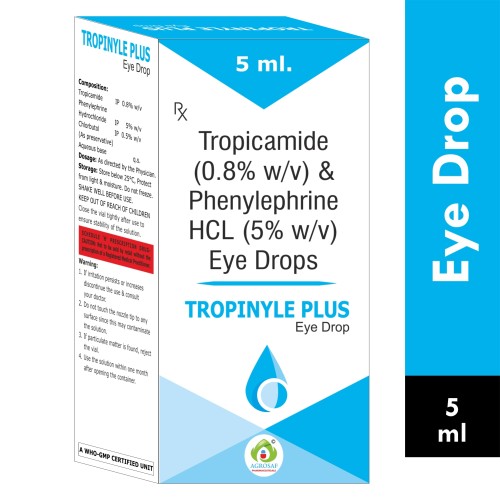
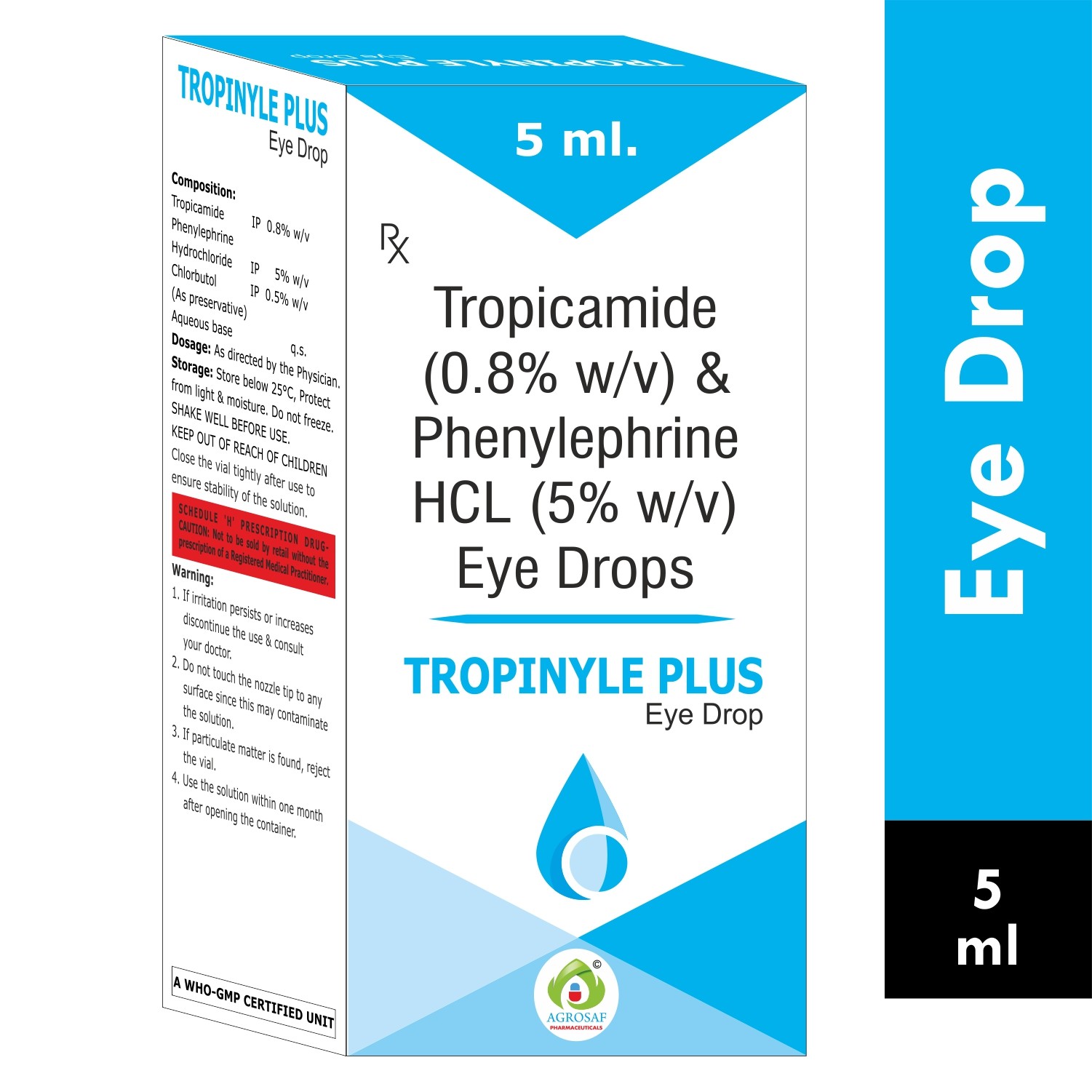
| PACKAGING TYPE: | 5ml In 1 Bottle |
| COMPOSITION: | Tropicamide(0.8% W/v) & Phenylephrine Hcl(5% W/v) Eye Drop |
| FORMULATION: | Drop |
| Description: | TROPINYLE PLUS Eye Drop is a combination ophthalmic solution used to induce mydriasis for diagnostic and surgical eye procedures. Tropicamide acts as an anticholinergic agent that relaxes the iris sphincter muscle, while Phenylephrine, a sympathomimetic agent, enhances pupil dilation by stimulating dilator muscles. This combination ensures rapid and effective dilation, making it ideal for fundus examination and pre-operative preparation. |
| Side Effects: | Temporary blurred vision Light sensitivity (photophobia) Eye irritation or stinging Increased heart rate (rare) Rare allergic reactions |
| How to Use: | Instill 1–2 drops in eye before examination Use as directed by ophthalmologist Avoid touching dropper tip Follow medical instructions strictly |
| Precaution: | For ophthalmic use only Use under medical supervision Avoid driving after use due to blurred vision Use cautiously in hypertension patients Store in a cool and dry place |
| Product Benefits: | Provides effective pupil dilation Fast-acting combination Ideal for diagnostic eye procedures Enhances visibility during eye examination Reliable and widely used formulation |
Frequently Asked Questions
TROPINYLE PLUS Eye Drop is used for pupil dilation (mydriasis) during eye examination and diagnostic procedures.
It contains Tropicamide 0.8% w/v and Phenylephrine Hydrochloride 5% w/v.
Tropicamide relaxes the eye muscles to dilate the pupil, while Phenylephrine stimulates dilation by constricting blood vessels in the eye.
You May Like
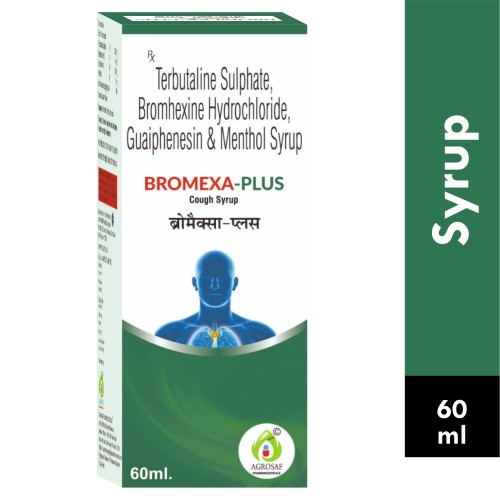
BROMEXA PLUS SYRUP
TERBUTALINE SULPHATE 1.25MG + BROMHEXINE HYDROCHLORIDE 4.0MG + GUAIPHENESIN 50MG & MENTHOL 2.5MG
₹ 124/-
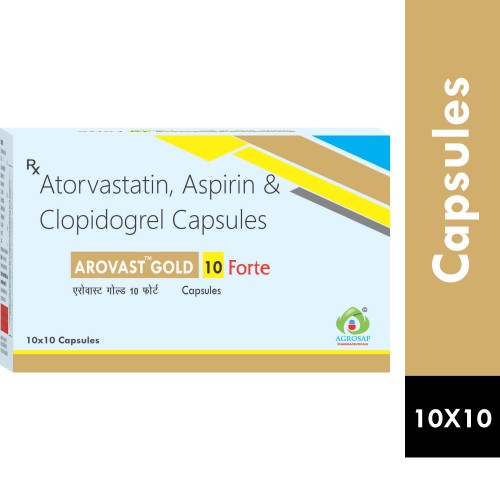
AROVAST GOLD 10 FORTE CAPSULES
ASPIRIN 150 MG , ATORVASTATIN 10 MG , CLOPIDOGREL BISULPHATE 75 MG
₹ 1080/-
BROMEXA PLUS SYRUP
TERBUTALINE SULPHATE 1.25MG + BROMHEXINE HYDROCHLORIDE 4.0MG + GUAIPHENESIN 50MG & MENTHOL 2.5MG
₹ 124/-
AROVAST GOLD 10 FORTE CAPSULES
ASPIRIN 150 MG , ATORVASTATIN 10 MG , CLOPIDOGREL BISULPHATE 75 MG
₹ 1080/-