


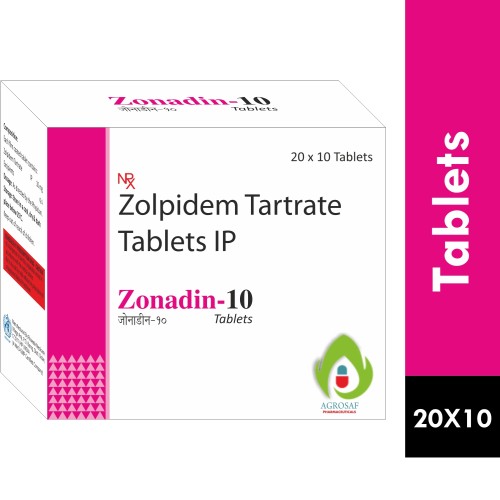
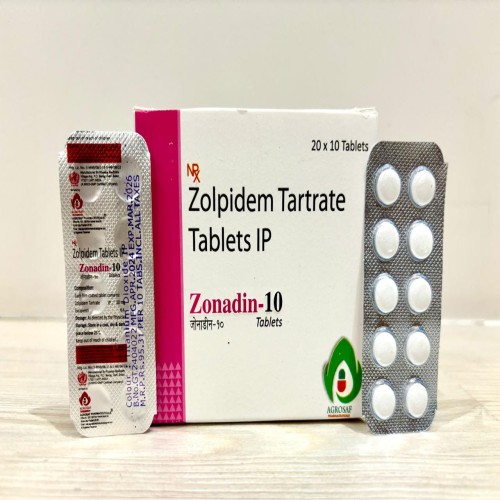
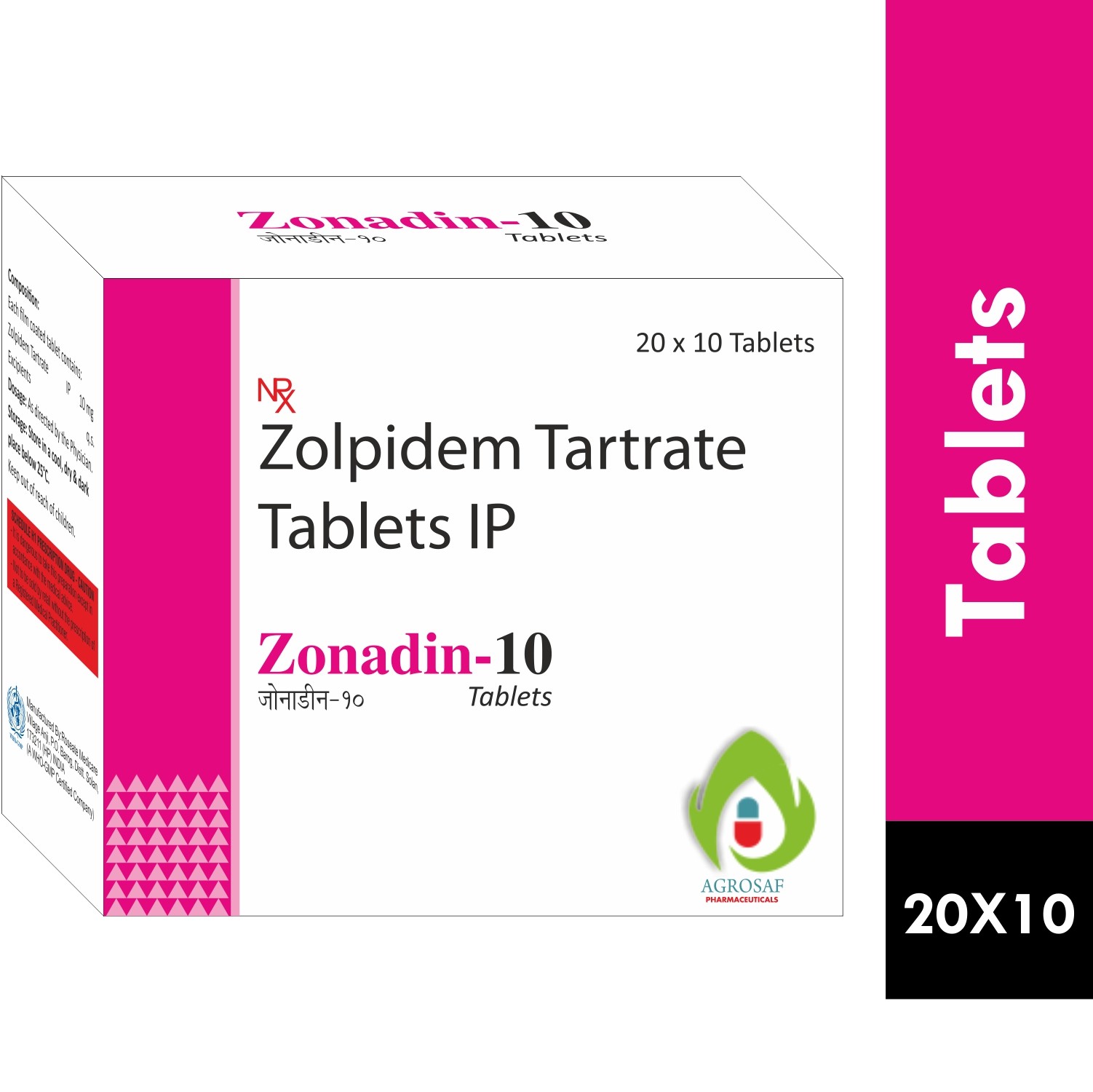
| PACKAGING TYPE: | 20x10 Blister (20 Strips In 1 Box) |
| COMPOSITION: | Zolpidem Tertrate 10mg Tablet |
| FORMULATION: | Tablet |
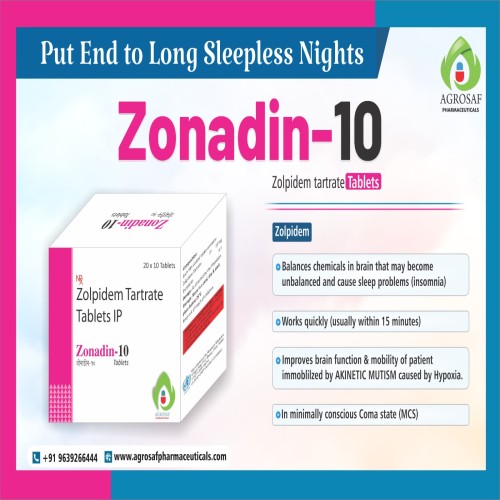
| Description: | ZONADIN 10 Tablet contains Zolpidem Tartrate 10mg, a sedative-hypnotic medication primarily used for the short-term treatment of insomnia. Zolpidem belongs to the non-benzodiazepine class of sleep aids (Z-drugs), which work by enhancing the activity of GABA neurotransmitters in the brain to induce sleep quickly and improve sleep quality. ZONADIN 10 is ideal for patients experiencing difficulty falling asleep or frequent nocturnal awakenings. |
| Side Effects: | Common side effects: Drowsiness or dizziness Headache Mild gastrointestinal upset (nausea, diarrhea) Fatigue the next morning Serious (rare) side effects: Memory problems or unusual behavior Sleepwalking, sleep-driving, or other complex sleep-related behaviors Allergic reactions (rash, itching, swelling) Severe drowsiness or confusion |
| How to Use: | Take immediately before bedtime, on an empty stomach Swallow the tablet whole with water Avoid activities requiring alertness (driving, operating machinery) after taking Use only as prescribed; do not exceed the recommended dose Avoid alcohol or other sedatives while on this medication |
| Precaution: | Not recommended for long-term use Use cautiously in patients with liver impairment, respiratory problems, or history of substance abuse Inform your doctor about all other medications to avoid drug interactions Avoid combining with alcohol or other CNS depressants Pregnant or breastfeeding women should use only under medical supervision |
| Product Benefits: | Promotes rapid sleep onset Improves sleep quality and duration Reduces nighttime awakenings Short-term use can help re-establish a regular sleep cycle Lower risk of dependence compared to traditional benzodiazepines when used appropriately |
Frequently Asked Questions
You May Like
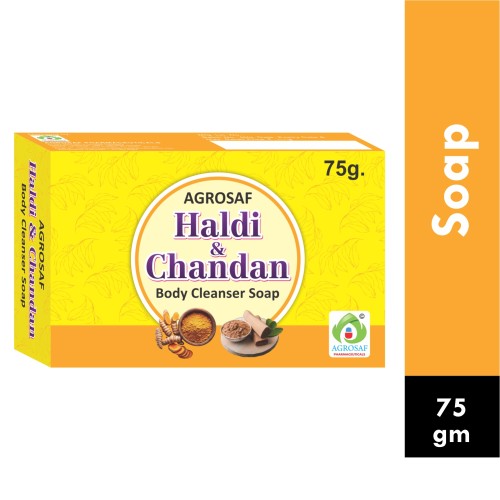
AGROSAF HALDI & CHANDAN SOAP 75 GM
BURAX PURIFIED 25MG, CURCUMA LONGA 5MG + RUBIA CORDIFOLIA 2.5MG + OCIMUM SANCTUM 2.5MG + TINOSPORA CORDIFOLIA 2.5MG + AZADIRACHTA INDICA 2MG + AMBLICA OFFICINALIS 1MG
₹ 115/-

VITSAFE O3 SOFTGEL CAPSULES
OMEGA 3 FATTY ACID , LUTEIN , ZEAXANTHIN , ASTAXANTHIN , VITAMINS , MINERALS
₹ 3640/-

CANNARMA HEMP HAIR OIL
Nariyal (Cocos nucifera) Endosperm oil – 55%, Methi (Trigonella foenum graceum) seed oil – 4%, Hemp seed oil (Cannabis sativa) – 21%, Almond (Prunus amygdalus) Seed oil – 12%, Bhringraj (Eclipta alba hassk.) Leaves Oil – 4%, Curry leaves (Murraya koenigii) Oil – 4%
₹ 399/-

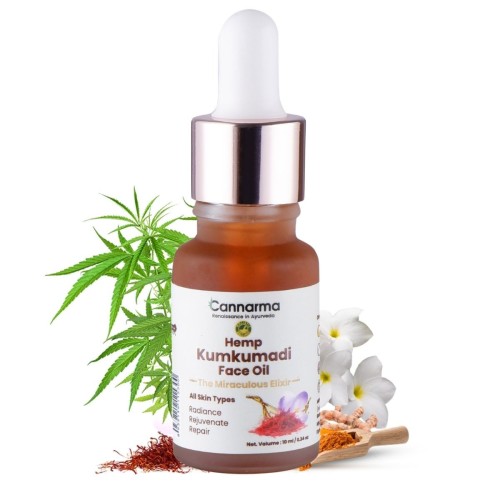
CANNARMA HEMP KUMKUMADI FACE OIL
Hemp Seed Oil (Cannabis sativa), Ancient Ayurvedic Kumkumadi oil Ingredients – Saffron Stg. (Crocus sativus), White Sandalwood Ht. Wd. (Santalum album) Lodhra St. Bk. (Symplocos racemosa), Patanga Ht. Wd.(Caesalpinia sappan), Red Sandalwood Ht. Wd. (Pterocarpus santalinus), Agarwood Ht. Wd. (Aquilaria agallocha), Vetiver Rt.(Vetiveria zizanioides), Manjistha Rt. (Rubia cordifolia), Liquorice Rt.(Glycyrrhiza glabra), Indian Bay Lf. (Cinnamomum tamala), Himalayan Cherry Ht. Wd. (Prunus cerasoides), Indian Lotus Fl. (Nelumbo nucifera), Kushta Rt. (Saussurea lappa), Turmeric Rz. (Curcuma longa), Daruharida St. (Berberis aristata), Gairika (Red Ochre), Nagakesara St. (Mesua ferrea), Palasa Fl. (Butea monosperma), Priyangu Fl.(Callicarpa macrophylla), Vatankura Lf. Bd. (Ficus benghalensis), Jasmine Fl. (Jasminum officinale), Sarsapa Sd. (Brassica campestris), Surabhi Rz. (Apinia galangal), Vaca Rz. (Acorus Calamus), Godugdha (Cow Milk), Tila Taila Sd. Oil. (Sesamum indicum), Jala.
₹ 999/-
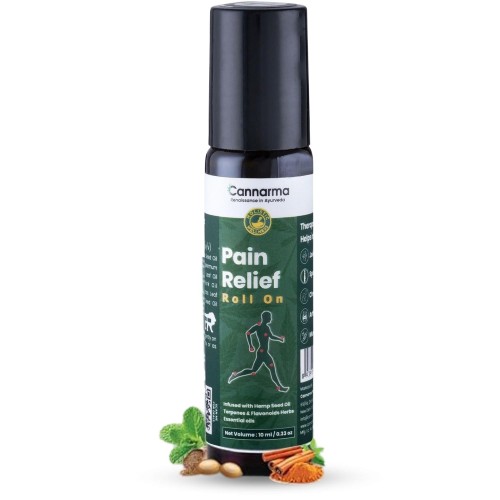
CANNARMA PAIN RELIEF ROLL ON
Sesamum Indicum Seed Oil - 10%, Linum Usitatissimum Seed Oil - 6%, Cymbopogon Citrates Leaf Oil - 6%, Trachyspermum Ammi Fruit Oil - 6%, Cinnamomum Zeylani- cum Bark Oil - 6%, Mentha Piperata Leaf Oil - 6%, Cannabis Sativa Seed Oil - QS
₹ 249/-

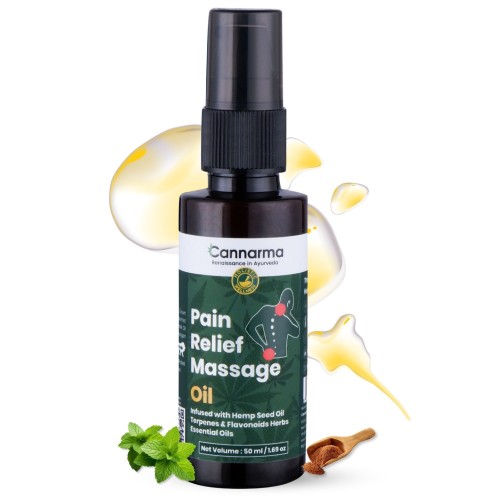
CANNARMA PAIN RELIEF MASSAGE OIL
Sesamum indicum Seed oil - 10%, Linum usitatissimum Seed Oil – 6%, Cinnamomun zeylanicum Bark Oil – 6%, Mentha piperata Leaf Oil – 6%, Cymbopogon citrates Leaf Oil - 6%, Trachyspermum ammi Fruit Oil - 6%, Base Ingredients: Vijaya Seed Oil - QS
₹ 599/-
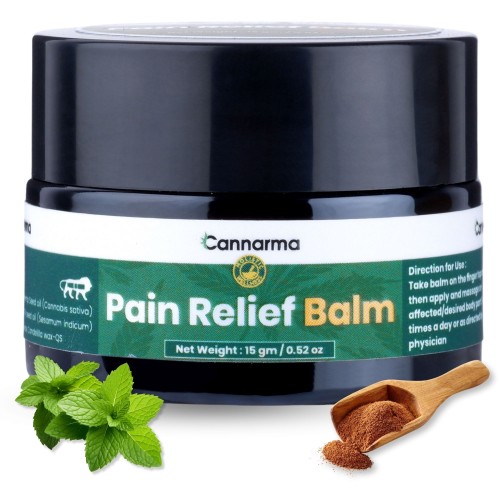
CANNARMA PAIN RELIEF BALM
Cannabis sativa Seed Oil - 6%, Linum usitatissimum Seed Oil - 2%, Cinnamomun zeylanicum Bark Oil - 2%, Mentha piperata Leaf Oil - 2%, Andropogon citrates Leaf Oil - 2%, Sesamum indicum Seed Oil - 2%, Trachyspermum ammi, Fruit Powder - 3%, Cocos nucifera Oil - 2%, Beeswax, Candelilla wax - QS
₹ 249/-
AGROSAF HALDI & CHANDAN SOAP 75 GM
BURAX PURIFIED 25MG, CURCUMA LONGA 5MG + RUBIA CORDIFOLIA 2.5MG + OCIMUM SANCTUM 2.5MG + TINOSPORA CORDIFOLIA 2.5MG + AZADIRACHTA INDICA 2MG + AMBLICA OFFICINALIS 1MG
₹ 115/-
VITSAFE O3 SOFTGEL CAPSULES
OMEGA 3 FATTY ACID , LUTEIN , ZEAXANTHIN , ASTAXANTHIN , VITAMINS , MINERALS
₹ 3640/-
CANNARMA HEMP HAIR OIL
Nariyal (Cocos nucifera) Endosperm oil – 55%, Methi (Trigonella foenum graceum) seed oil – 4%, Hemp seed oil (Cannabis sativa) – 21%, Almond (Prunus amygdalus) Seed oil – 12%, Bhringraj (Eclipta alba hassk.) Leaves Oil – 4%, Curry leaves (Murraya koenigii) Oil – 4%
₹ 399/-
CANNARMA HEMP KUMKUMADI FACE OIL
Hemp Seed Oil (Cannabis sativa), Ancient Ayurvedic Kumkumadi oil Ingredients – Saffron Stg. (Crocus sativus), White Sandalwood Ht. Wd. (Santalum album) Lodhra St. Bk. (Symplocos racemosa), Patanga Ht. Wd.(Caesalpinia sappan), Red Sandalwood Ht. Wd. (Pterocarpus santalinus), Agarwood Ht. Wd. (Aquilaria agallocha), Vetiver Rt.(Vetiveria zizanioides), Manjistha Rt. (Rubia cordifolia), Liquorice Rt.(Glycyrrhiza glabra), Indian Bay Lf. (Cinnamomum tamala), Himalayan Cherry Ht. Wd. (Prunus cerasoides), Indian Lotus Fl. (Nelumbo nucifera), Kushta Rt. (Saussurea lappa), Turmeric Rz. (Curcuma longa), Daruharida St. (Berberis aristata), Gairika (Red Ochre), Nagakesara St. (Mesua ferrea), Palasa Fl. (Butea monosperma), Priyangu Fl.(Callicarpa macrophylla), Vatankura Lf. Bd. (Ficus benghalensis), Jasmine Fl. (Jasminum officinale), Sarsapa Sd. (Brassica campestris), Surabhi Rz. (Apinia galangal), Vaca Rz. (Acorus Calamus), Godugdha (Cow Milk), Tila Taila Sd. Oil. (Sesamum indicum), Jala.
₹ 999/-
CANNARMA PAIN RELIEF ROLL ON
Sesamum Indicum Seed Oil - 10%, Linum Usitatissimum Seed Oil - 6%, Cymbopogon Citrates Leaf Oil - 6%, Trachyspermum Ammi Fruit Oil - 6%, Cinnamomum Zeylani- cum Bark Oil - 6%, Mentha Piperata Leaf Oil - 6%, Cannabis Sativa Seed Oil - QS
₹ 249/-
CANNARMA PAIN RELIEF MASSAGE OIL
Sesamum indicum Seed oil - 10%, Linum usitatissimum Seed Oil – 6%, Cinnamomun zeylanicum Bark Oil – 6%, Mentha piperata Leaf Oil – 6%, Cymbopogon citrates Leaf Oil - 6%, Trachyspermum ammi Fruit Oil - 6%, Base Ingredients: Vijaya Seed Oil - QS
₹ 599/-
CANNARMA PAIN RELIEF BALM
Cannabis sativa Seed Oil - 6%, Linum usitatissimum Seed Oil - 2%, Cinnamomun zeylanicum Bark Oil - 2%, Mentha piperata Leaf Oil - 2%, Andropogon citrates Leaf Oil - 2%, Sesamum indicum Seed Oil - 2%, Trachyspermum ammi, Fruit Powder - 3%, Cocos nucifera Oil - 2%, Beeswax, Candelilla wax - QS